Access My Links
That's right, now you can have access to all of the bookmarked pages that I use to produce this blog. Topics such as alcoholism, diet and exercise can all be accessed through these links, as well as quite a few you haven't heard of yet. Check them out and put these resources to work for you in putting together a healthy lifestyle.
Tuesday, January 30, 2007

Monday, January 29, 2007
Flu Season!
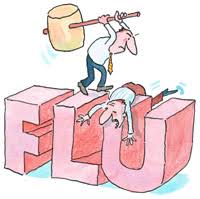 Courtesy of Google Images
As students the pressure to meet deadlines and succeed has never been greater, leaving little time to battle the epidemic that is flu season. It's upon us again and our campus is a literal melting pot for the virus. No student has the time or patience to get sick, so it is important to use every resource available to try and keep healthy.
At the University of Nebraska in Omaha, officials are beginning to see a dangerous trend forming. According to an article in The Gateway by Eugene Kim, even though students there are offered the influenza vaccine at a discounted price, they are not seeing the interest that they once did. Out of 458 shots given so far at Student Health Services, only 169 were given to students; that's just a little more than one-quarter of the vaccinations. So why are students not coming in to get pricked? The reasons vary from reports that the vaccine doesn't work on them to stories about never having the flu ever.
Despite the stubbornness of students to get poked, the flu brings with it some very real and serious consequences, according to the Center for Disease Control (CDC). Left untreated, a person's condition may clear up in a few days no problem, or in rare cases lead to pneumonia or death. Influenza kills about 36,000 people in the US every year.
Even though most cases never lead to death, students have a lot to deal with if they come down with a bad case of the flu. Several Nebraska towns had to actually shut down for the better part of a week due to the high rate of infection. The University of Nebraska had to order more vaccines due to a shortage. Those students who chose not to or could not get the vaccine put everyone around them at risk by going to class, the library or just common areas where the disease is easily spread through coughing or sneezing. It's important that they think about not only their health, but the health of others.
For those among us who refuse to get vaccinated, there is a solution, though it is not fool proof. If you're just too scared of that needle, the CDC does recommend some good health habits on their page that may help defend you against the flu.
Flu Season typically lasts from October to around February. Follow These Tips to Make it Through:
1. Avoid Contact- Don't touch other people who are sick, likewise stay away from healthy people if you are sick.
2. Stay Home When Sick- This is the hard one for students, but unless you have something you must absolutely attend or turn in, just do everyone a favor and stay in bed.
3. Cover Your Mouth and Nose- The important point is this: use a tissue. This is how the disease is spread, through sneezing; so if everyone followed this and No. 4, the US could cut down on influenza related deaths substantially.
4. Clean Your Hands- More germs are on human hands than we could imagine, and we're constantly putting them inside our mouths. Wash your hands with soap and hot water to cut down the amount of germs enter your body.
5. Avoid Touching Your Eyes, Hands and Mouth- This is where all the nasty germs from your hands actually enter your body. Keep the germs away.
6. Practice Other Healthy Habits- Eating a healthy diet and getting plenty of sleep often become the last of a students priorities. Nevertheless, they can help to avoid the flu and other sicknesses caused simply by a weakened immune system.
Now according to the CDC's "Flu Page," vaccinations are the number one way to avoid infection and you can't beat a doctor's advice, but all these measures can help as well. Students should also keep in mind that despite how important their classes are, they're still human, their body needs time to heal; if they give it that, they may save themselves and the people around them lots of suffering.
Thursday, January 25, 2007
Tuesday, January 23, 2007
Food Network
 Courtesy of Google Images.
College students spend much of their time either in class or studying, so when they get done with their day it's not suprising to see them sprawled out in front of the television, zoning out to their favorite show; The Simpsons, Family Guy, The OC and maybe even Jon Stewart are all pretty typical choices when students pick up the remote, but lately a new, more instructional channel is drawing our attention. That channel is the Food Network.
First thing some people are thinking is, "What? My grandma used to watch that while she was sewing." Seriously though, in my community I have observed an increasing amount of students, male and female, tuning in to shows like Emeril, Good Eats and 30-Minute Meals with Rachael Ray during the past few years. I'm not the only one either; in its' September 11, 2006 issue Time published an article about the soaring popularity of Ray's program and the diverse audience that it attracts. Ray's show, during which she shows how to cook an entire meal in 30 minutes, has a fan base that includes both teenage and young adult viewers as well as many younger children watching at home with their parents.
I see a very positive development here as Ray is not only providing a new source of entertainment for bored children and students, but is also enlightening us to ways of improving our diet that we can actually do. Before Rachel Ray, cooking programs tended to be boring and drab; on top of that they were always cooking something that a normal person would either never dream of trying to cook, or never eat. All of that has changed with Ray's bubbly personality, fun recipes and a timeline that anyone can handle.
Hopefully the techniques and tricks Ray uses to make good, healthy food quick will persuade students to give their own diet a long needed overhaul. In an article on WebMD entitled "Many College Students Flunking Eating 101," the author Mike Fillon raises some serious concerns about the diet choices of University-goers. Many students it turns out actually think that they are eating well when, in reality, they are eating bad foods at all times of the day with little or no thought of nutritional value. While some students do make the concious decision to eat right, just as many, if not more, are living on cafeteria hamburgers and microwaved Top Ramen. It isn't like high school where you can depend on parents or lunch-ladies to decide what to serve you, college is the time when we build eating habits for the rest of our lives and many of the habits that are being built- aren't good ones.
Hopefully a chef like Ray, and the increasingly engaging programming on Food Network, can begin to change things a little bit. Since more college students are watching, hopefully they're taking the lessons to heart, learning how to make their own quick and healthy meals. They don't have to eat fast food between classes or ice cream when they're studying late, it's all a matter of choice. Its good that somebody has finally shown us, as well as the rest of America, that healthy eating doesnt have to take a long time or taste bad, you just have to make the decision to do it: to cook instead of go out, to eat an apple instead of chips and to make the time to be a fitter person.
Thursday, January 18, 2007
Gabcast! The Health Channel #2 - Episode 1: Binge Drinking
A short audio discussion of the dangers and very real consequences facing the ever-growing population of young binge drinkers.
Sources:
1)Link to Daily Evergreen article regarding alcohol and crime in a college town
2)Link to survey concerning the consequences facing binge drinkers
3)Link to survey regarding the prevelancy of college drinking
A short audio discussion of the dangers and very real consequences facing the ever-growing population of young binge drinkers.
Sources:
1)Link to Daily Evergreen article regarding alcohol and crime in a college town
2)Link to survey concerning the consequences facing binge drinkers
3)Link to survey regarding the prevelancy of college drinking
Gabcast! The Health Channel #1 - Welcome
Just a small introduction to the author and what this blog is about.
Just a small introduction to the author and what this blog is about.
Tuesday, January 16, 2007
Healthy Living Starts Early
The American society is more overweight than ever, with childhood obesity reaching record highs in recent years, raising some real concern about what parents are teaching their children about healthy living.When I was in grade school parents either sent their kids to school with bag lunches which were often thrown away, or the kids bought food at the school cafeteria. What I remember most about both of these is that nutritious food wasn't usually in the equation either way. Parents who did send their children to school with a good lunch could usually expect for it to be ignored or thrown away.
It seems that some schools are finally catching on. In an article by Angie Jeffrey of the Greater Danbury News-Times, I was pleased to read that a school in this community in Connecticut is finally providing students with the option to be healthy. Not only have the schools started adjusting their cafeteria menu to include sensible foods like fruit cups, whole grain cereal and muffins, according to the article, but they've also began to reduce portion size as well. This is a move in a very positive direction from traditional school lunches such as pizza and hamburgers with a side of fries.
The change in Danbury was sparked by the implementation of an early morning exercise program four years ago. The program allows students to come to school before class two days a week and walk indoors with their parents and teachers, before having a healthy breakfast. While most of the students in the story participate chiefly for fun, the healthy vibe seems to have worn off; one student told Ms. Jeffrey that she even had fresh fruit at her birthday party.
In a day and age where kids often spend 6-7 hours a day immobile at a desk for 12 years of their lives in school, they can use all of the motivation we can give them to be healthy. If we can teach our children to love exercise and the importance of healthy eating now, they won’t need to join the millions of Americans struggling with diet fads in the future.
According to the American Heart Association, all children over the age of two should get at least 30 minutes of fun physical activity a day. Furthermore, older children should exercise vigorously, ideally in fun activities like group sports, 3-4 times a week for 30 minutes or more. The association adds that "inactive children are likely to become inactive adults," so it is important to teach our children good habits now, before they develop harmful ones. So by reducing the children's sedentary time and replacing it with fun exercise, the schools in Danbury have set an example of the way we should be teaching our children to be healthy adults.
Did you Digg this post? Show your support here!!
It seems that some schools are finally catching on. In an article by Angie Jeffrey of the Greater Danbury News-Times, I was pleased to read that a school in this community in Connecticut is finally providing students with the option to be healthy. Not only have the schools started adjusting their cafeteria menu to include sensible foods like fruit cups, whole grain cereal and muffins, according to the article, but they've also began to reduce portion size as well. This is a move in a very positive direction from traditional school lunches such as pizza and hamburgers with a side of fries.
The change in Danbury was sparked by the implementation of an early morning exercise program four years ago. The program allows students to come to school before class two days a week and walk indoors with their parents and teachers, before having a healthy breakfast. While most of the students in the story participate chiefly for fun, the healthy vibe seems to have worn off; one student told Ms. Jeffrey that she even had fresh fruit at her birthday party.
In a day and age where kids often spend 6-7 hours a day immobile at a desk for 12 years of their lives in school, they can use all of the motivation we can give them to be healthy. If we can teach our children to love exercise and the importance of healthy eating now, they won’t need to join the millions of Americans struggling with diet fads in the future.
According to the American Heart Association, all children over the age of two should get at least 30 minutes of fun physical activity a day. Furthermore, older children should exercise vigorously, ideally in fun activities like group sports, 3-4 times a week for 30 minutes or more. The association adds that "inactive children are likely to become inactive adults," so it is important to teach our children good habits now, before they develop harmful ones. So by reducing the children's sedentary time and replacing it with fun exercise, the schools in Danbury have set an example of the way we should be teaching our children to be healthy adults.
Did you Digg this post? Show your support here!!
Subscribe to:
Posts (Atom)
