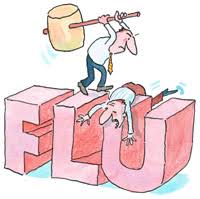
 Courtesy of Google Images
As students the pressure to meet deadlines and succeed has never been greater, leaving little time to battle the epidemic that is flu season. It's upon us again and our campus is a literal melting pot for the virus. No student has the time or patience to get sick, so it is important to use every resource available to try and keep healthy.
At the University of Nebraska in Omaha, officials are beginning to see a dangerous trend forming. According to an article in The Gateway by Eugene Kim, even though students there are offered the influenza vaccine at a discounted price, they are not seeing the interest that they once did. Out of 458 shots given so far at Student Health Services, only 169 were given to students; that's just a little more than one-quarter of the vaccinations. So why are students not coming in to get pricked? The reasons vary from reports that the vaccine doesn't work on them to stories about never having the flu ever.
Despite the stubbornness of students to get poked, the flu brings with it some very real and serious consequences, according to the Center for Disease Control (CDC). Left untreated, a person's condition may clear up in a few days no problem, or in rare cases lead to pneumonia or death. Influenza kills about 36,000 people in the US every year.
Even though most cases never lead to death, students have a lot to deal with if they come down with a bad case of the flu. Several Nebraska towns had to actually shut down for the better part of a week due to the high rate of infection. The University of Nebraska had to order more vaccines due to a shortage. Those students who chose not to or could not get the vaccine put everyone around them at risk by going to class, the library or just common areas where the disease is easily spread through coughing or sneezing. It's important that they think about not only their health, but the health of others.
For those among us who refuse to get vaccinated, there is a solution, though it is not fool proof. If you're just too scared of that needle, the CDC does recommend some good health habits on their page that may help defend you against the flu.
Flu Season typically lasts from October to around February. Follow These Tips to Make it Through:
1. Avoid Contact- Don't touch other people who are sick, likewise stay away from healthy people if you are sick.
2. Stay Home When Sick- This is the hard one for students, but unless you have something you must absolutely attend or turn in, just do everyone a favor and stay in bed.
3. Cover Your Mouth and Nose- The important point is this: use a tissue. This is how the disease is spread, through sneezing; so if everyone followed this and No. 4, the US could cut down on influenza related deaths substantially.
4. Clean Your Hands- More germs are on human hands than we could imagine, and we're constantly putting them inside our mouths. Wash your hands with soap and hot water to cut down the amount of germs enter your body.
5. Avoid Touching Your Eyes, Hands and Mouth- This is where all the nasty germs from your hands actually enter your body. Keep the germs away.
6. Practice Other Healthy Habits- Eating a healthy diet and getting plenty of sleep often become the last of a students priorities. Nevertheless, they can help to avoid the flu and other sicknesses caused simply by a weakened immune system.
Now according to the CDC's "Flu Page," vaccinations are the number one way to avoid infection and you can't beat a doctor's advice, but all these measures can help as well. Students should also keep in mind that despite how important their classes are, they're still human, their body needs time to heal; if they give it that, they may save themselves and the people around them lots of suffering.


1 comment:
Very timely posting. I'm noticing that the flu is now making the rounds. It's particularly challenging for students in classes with computers since everyone touches the keyboard and mouse -- where germs love to hide :)
Post a Comment